

I wanted to share this blog post about how important self reflection is to the journey of self growth and internal happiness.
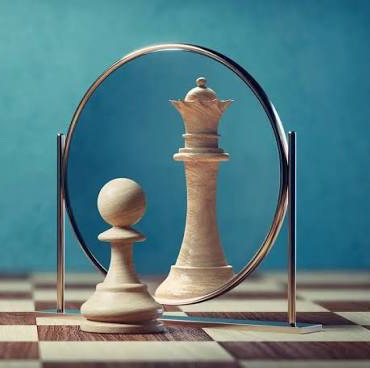
Self Reflection and Self Growth
The Mirror You Keep Avoiding: Why Self-Reflection Is the Engine of Growth
Most of us are moving too fast to learn anything from our own lives.
We finish a hard week and immediately start the next one. We have the same argument for the fifth time and chalk it up to the other person. We feel a vague dissatisfaction humming under the surface and drown it out with another podcast, another scroll, another task. Experience keeps offering us lessons, and we keep leaving them unopened on the doorstep.
That's the quiet tragedy of a busy life: experience alone doesn't teach you anything. Reflection is where the teaching happens.
Growth isn't automatic
We like to believe that time plus effort equals growth. But you can repeat the same year twenty times and call it a career. You can date the same problems in different people and call it bad luck. Without reflection, we don't accumulate wisdom — we accumulate repetition.
Self-reflection is the act of turning experience into information. It's asking: What actually happened there? What was my part in it? What did I feel, and what was that feeling trying to tell me? What would I do differently? These questions sound simple. They are also the difference between ten years of experience and one year of experience repeated ten times.
The mirror is uncomfortable — that's the point
Honest reflection stings a little. It requires admitting that the fight wasn't entirely their fault, that the missed opportunity involved your hesitation, that the habit you mock in others lives comfortably in you.
This discomfort is precisely why reflection works. Growth happens at the edge of what we'd rather not look at. The people who seem to evolve fastest aren't smarter or luckier — they've simply built a higher tolerance for uncomfortable truths about themselves. They treat flaws as data, not verdicts.
And here's the paradox: the more honestly you look at yourself, the less harsh you become. Vague guilt thrives in the dark. When you actually examine a failure, it usually shrinks to something specific and fixable. Reflection replaces shame with information.
How to actually do it
You don't need a silent retreat or a leather-bound journal. You need a few honest minutes, repeated.
Ask one good question a day. Not "was today good?" but "what drained me today, and what gave me energy?" Patterns emerge within weeks, and patterns are where the real answers live.
Write it down. Thoughts move in circles; writing moves in lines. A messy paragraph on your phone counts. The act of putting words to an experience forces a clarity that thinking alone never quite reaches.
Review the tape, not the highlight reel. Once a week, look back at what actually happened — the conversation you avoided, the promise you kept, the moment you were proud of. Both halves matter. Reflection that only catalogs failures isn't honesty; it's self-punishment wearing honesty's clothes.
Close the loop. Reflection without action is just sophisticated rumination. End each session with one small, concrete adjustment. Tiny course corrections, compounded over months, quietly redirect an entire life.
The relationship underneath it all
Here's what nobody tells you: self-reflection isn't really a productivity habit. It's a relationship — the one you have with yourself. Skip it, and you become a stranger living in your own life, wondering why your choices don't feel like yours.
But sit with yourself regularly — honestly, kindly, curiously — and something shifts. You start catching your patterns in real time instead of in hindsight. You choose instead of react.
The mirror was never the enemy. Avoiding it was.
Growth doesn't ask you to be someone new. It asks you to finally meet who you already are — and to take them somewhere better.